
A Memory That Cannot Be Inherited Whole
The Glass RoomThis flow traces the transmission of the Landauer story through letters, photographs, houses, and people who only partially remember one another.
increasing Bearing strength in each event
 decreasing
Bearing strength in each eventdecreasingParents Remember a Home
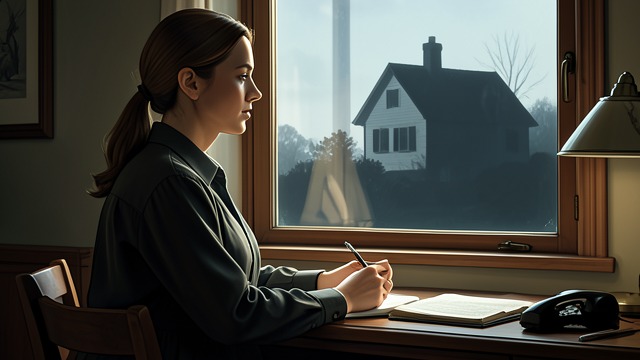
Memory Begins as Testimony
Liesel’s letters
Liesel writes to Hana about the house, the children, and her hope of returning. The letters preserve a world that the family cannot physically inhabit.
Her descriptions mix everyday details with the emotional force of absence.
A record shaped by longing
The letters are not neutral accounts; they are attempts to keep relationships alive. Their gaps and delays make the past both intimate and incomplete.
Children Grow Beyond Their Memories
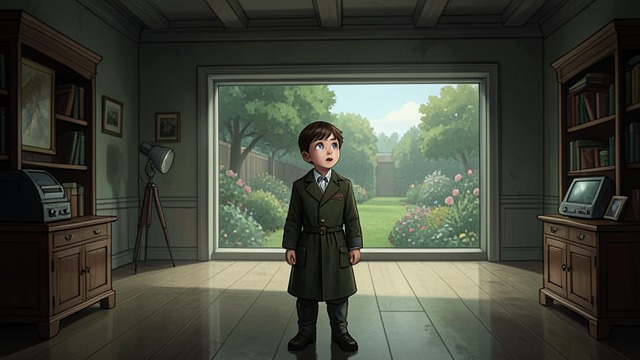
Childhood Recollections Change
A former scale
As Ottilie grows up, the house of her childhood remains huge in memory. The dimensions of rooms and gardens are shaped by a child’s experience rather than adult measurement.
Her later return makes the discrepancy between recollection and reality visible.
Inherited stories
The children receive the past through parental accounts, photographs, and fragments. Their memory is real but cannot be identical to the life their parents experienced.
Hana’s Archive of Letters

Correspondence as a Private Archive
Delayed news
Hana and Liesel exchange letters that arrive late, are opened by censors, or go missing. Each letter contains both everyday details and the possibility of news about people they cannot reach.
The correspondence makes separation measurable in weeks and years.
A friendship preserved
The letters carry affection and shared language across political barriers. They preserve a relationship, though they cannot replace presence or guarantee that either woman knows the other’s current life.
The Photo That Connects Women
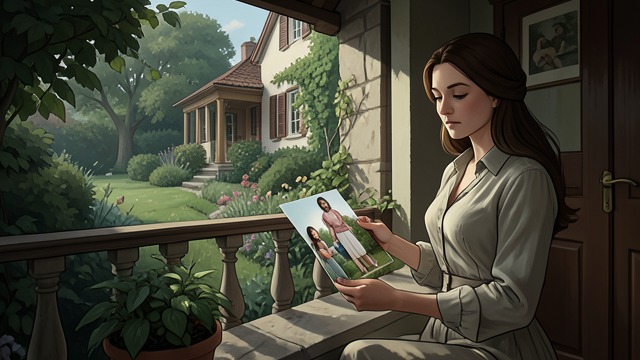
An Image Transmits Memory
A family on the terrace
Hana shares a photograph of the Landauers with Zdenka, who has never known the family personally. The image connects the present occupant of the house to the former residents.
Hana’s stories give context that the photograph alone cannot supply.
A new recipient
Zdenka becomes a witness to a history handed down through friendship rather than family. The image’s meaning changes as it passes into new hands.
Marie and Ottilie Reconnect
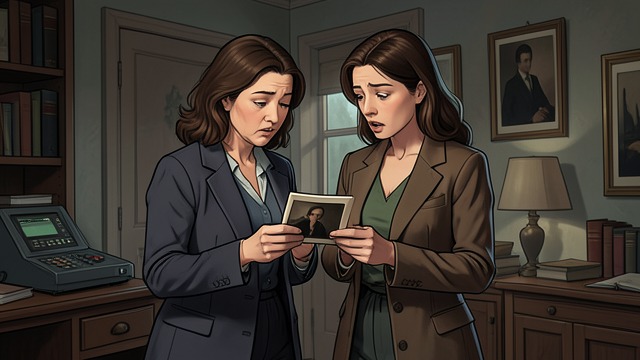
Memory Finds a Person
The recognition
Marie remembers the house and her mother’s presence; Ottilie recognizes the childhood name Marika. Their reunion turns a building’s distant history into a living relationship.
Each woman carries a different portion of the story.
What transmission cannot do
The meeting reconnects memories but cannot make them complete or identical. The novel’s final image emphasizes that historical inheritance is assembled from partial recollections, not delivered whole.
During the family’s first years of exile
During the years after departure
During the years when letters cross wartime borders
During the postwar heritage visits
At the house museum in 1990
